
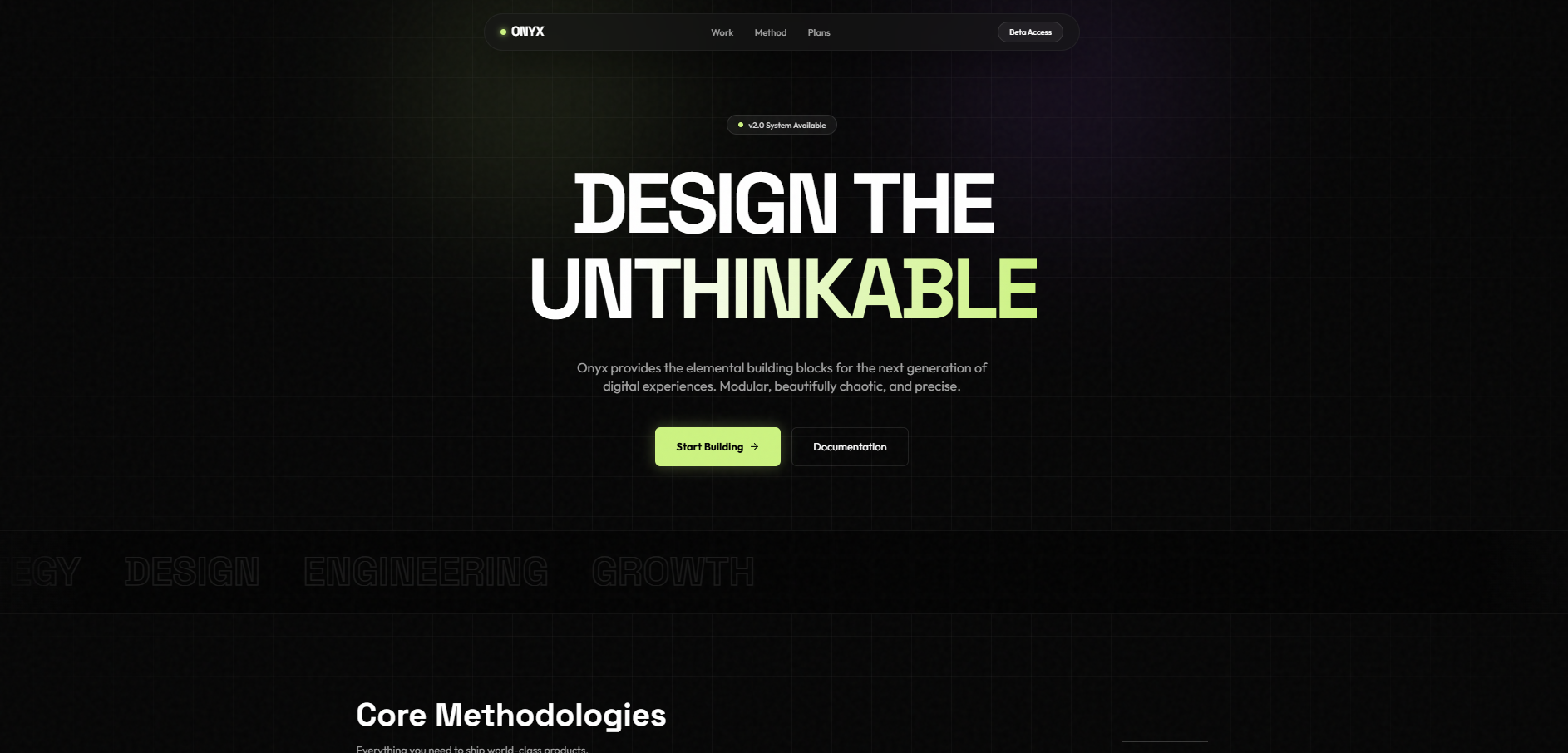
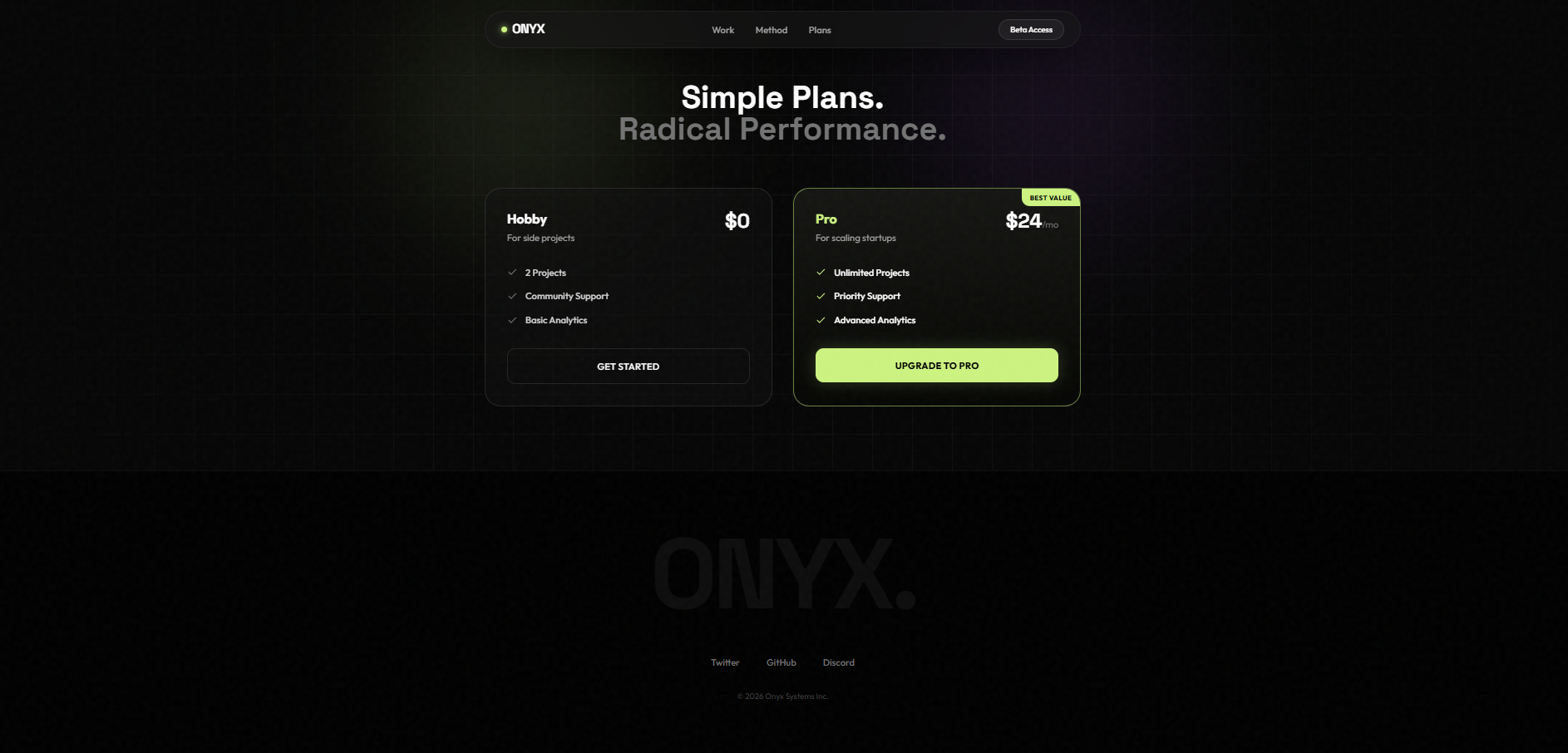

This project is a single-page scrolling website designed to demonstrate modern 2025-era frontend techniques. The architecture relies on utility-first CSS (Tailwind) to handle complex styling directly in the markup, ensuring a lightweight and maintainable codebase.
Key Technical Implementations:
1. Advanced Layouts (The “Bento” Grid)
-
Technique: We utilized
display: gridwithgrid-template-columnsandrow-spanutilities. -
Implementation: The “Method” section uses a complex grid where the primary feature card spans two columns and two rows (
col-span-2 row-span-2), while secondary cards fill the remaining space. This creates the popular, modular “Bento box” aesthetic that allows for varying content density while maintaining alignment.
2. Glassmorphism & Depth
-
Technique: Extensive use of
backdrop-filter: blur()combined with semi-transparent RGBA backgrounds. -
Implementation: The floating navigation bar and feature cards use a custom
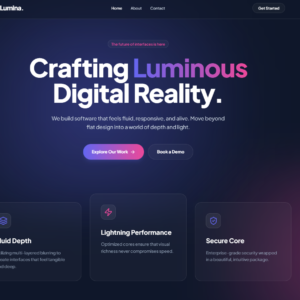
.glassutility class. This creates a frosted glass effect that blurs the content behind it, establishing visual hierarchy. Depth is further enhanced using subtle white borders (border-white/5) and localized glow effects behind specific elements.
3. Performance-First Animation
-
Technique: CPU-efficient CSS Keyframes (
@keyframes) defined in the Tailwind configuration. -
Implementation:
-
Ambient Lighting: Large, blurred background blobs use
transform: translate()animations to drift slowly, creating an “alive” feeling without impacting layout repaints. -
Infinite Marquee: A seamless text loop implemented via
translateXanimation, duplicating the text content to ensure no visual gaps during the scroll cycle. -
Entrance Effects: Elements use a staggered
fade-upanimation controlled byanimation-delayclasses to guide the user’s eye down the page upon load.
-
4. Texture & Lighting
-
Technique: SVG Filters and CSS Gradients.
-
Implementation: To avoid the “flat” look common in digital design, we overlaid a fixed
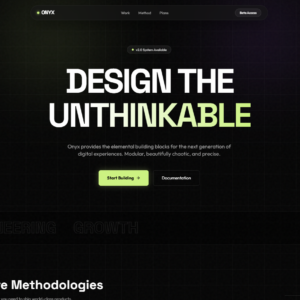
pointer-events-nonediv containing an SVG noise filter. This adds a subtle film grain texture across the entire viewport. Additionally, text gradients (bg-clip-text) are used on the main headline to blend the text color from white to the electric lime accent color.
5. Interactive States
-
Technique: Tailwind’s
groupandgroup-hovermodifiers. -
Implementation: Instead of simple color changes, hover states trigger complex transformations on child elements. For example, hovering over a feature card causes the internal icon to scale up and the background gradient opacity to increase, creating a tactile, responsive feel.

Reviews
There are no reviews yet.